The Better Your Camera Gets, the Worse You Feel — Here's Why
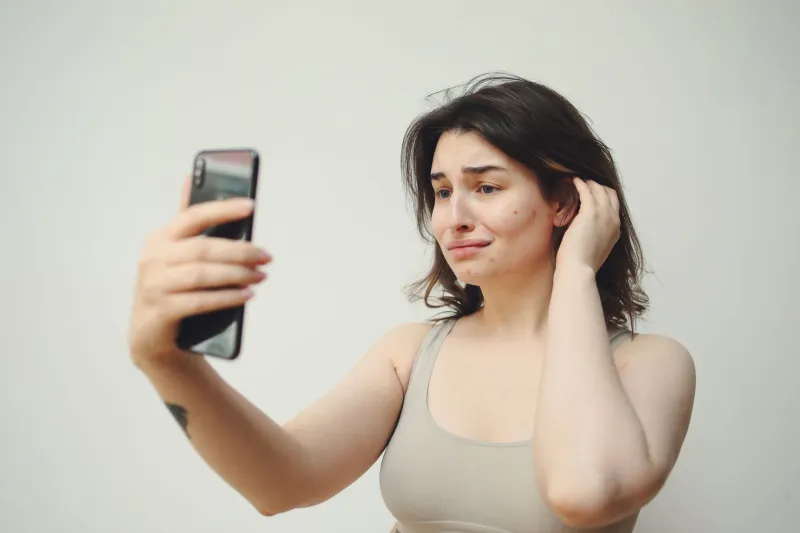
There's a cruel irony baked into the last decade of smartphone photography. Every year, manufacturers roll out sensors with more megapixels, wider apertures, and smarter computational engines. Every year, the marketing promises crisper, more lifelike images. And every year, a growing number of people look at those crisper, more lifelike images of themselves and feel genuinely worse about what they see.
This isn't a coincidence. It's a feedback loop — and photo editing apps are sitting right at the center of it.
What Your Old Phone Was Actually Doing for You
Cast your mind back to a mid-2010s iPhone or a budget Android from around that era. The photos weren't technically impressive. They were soft, sometimes blurry around the edges, and noise crept in the moment the sun dipped below the horizon. But here's the thing nobody talks about: that softness was flattering. The limited dynamic range meant your camera couldn't fully resolve every pore, every fine line, every shadow under your eyes at 2 p.m. in harsh overhead sunlight.
In a very real sense, those older sensors were doing a version of what beauty filters do now — just accidentally, and for free.
Fast-forward to 2024. A flagship phone camera is packing sensors so sensitive they can shoot detailed portraits in near-darkness. Computational photography pipelines process dozens of frames in a fraction of a second. The result is technically stunning. It's also, for a lot of people, kind of terrifying to look at.
The Ultra-Wide Problem Nobody Warned Us About
One of the biggest contributors to selfie anxiety isn't even the main camera. It's the ultra-wide lens that became standard equipment on most mid-range and premium phones over the past few years. Ultra-wide lenses are incredible for landscapes and group shots, but when you're holding your phone at arm's length, they introduce distortion that can make noses appear wider, foreheads larger, and chins sharper than any mirror would show you.
The laws of optics aren't going anywhere. A lens with a shorter focal length captures more of the scene by bending light more aggressively — and that bending doesn't spare your face. Plenty of users have switched their front camera to the primary lens specifically to avoid this effect, but the damage to perception has already been done. People have started to believe that what their phone shows them is the truth, even when the physics say otherwise.
Computational Photography: A Gift That Keeps Taking
Then there's the processing side of things. Modern phones don't just capture a photo — they construct one. HDR algorithms, AI-powered noise reduction, and multi-frame compositing all work together to produce an image that's technically sharper and more detailed than a single raw frame would be.
For landscapes and architecture, this is genuinely magical. For skin, it's a mixed bag. That AI sharpening pass that makes tree bark look incredible? It also traces every texture on your face with the same enthusiastic precision. The HDR processing that saves blown-out skies can also carve deep shadows into the hollows of your cheeks in a way that feels almost surgical.
Some manufacturers have tried to address this by quietly dialing back sharpening on faces, or building soft-focus modes into their camera apps. Samsung got called out a few years back for applying skin smoothing by default — which turned out to be its own kind of controversy. The point is that there's no neutral ground here. Your phone is always making choices about how to render your face, and those choices have real psychological consequences.
The App Dependency Loop
Here's where photo editing apps enter the picture — literally. When your camera is showing you a hyper-detailed version of your face that feels unfamiliar and unflattering, the natural response is to reach for a tool that can bring it back toward something that feels more like you. Apps like Facetune, YouCam Perfect, and Adobe Lightroom's portrait tools have all seen sustained growth that tracks closely with the improvements in smartphone camera hardware.
That's not a coincidence. The better cameras get at capturing reality, the more work users feel compelled to do to soften that reality back down.
The loop looks something like this: better camera reveals more detail → detail feels unflattering compared to how you see yourself in a mirror → editing app smooths, brightens, and reshapes → edited photo becomes the new reference point for how you're "supposed" to look → unedited camera output feels even more jarring by comparison → reach for the editing app again, with the settings pushed a little further.
Some researchers who study body image and social media have started calling this cycle "beauty app dependency," and while it's not a clinical diagnosis, the pattern is real and well-documented in user behavior data.
The Mirror Doesn't Lie, But Your Camera Might
Here's something worth sitting with: the image you see in your bathroom mirror is almost certainly more accurate to how other people perceive you in person than any photo your phone takes. Mirrors reflect light at a focal distance that's roughly equivalent to how humans see each other in conversation. Phone cameras — especially ultra-wide lenses held close — do not.
This means millions of Americans are forming opinions about their own faces based on an optical representation that's technically distorted, processed by an AI, and sharpened to a degree that no human eye actually experiences. And then they're editing that distorted image to feel okay about it, and then using the edited version as their social baseline.
No wonder anxiety is up.
So What Do You Actually Do About It?
There's no perfect fix here, but a few practical shifts can help break the loop — or at least slow it down.
First, pay attention to which lens you're using. Most phones let you shoot selfies with the primary camera rather than the front-facing wide-angle. It requires flipping the phone around and using the screen as a viewfinder, but the results are dramatically less distorted.
Second, shoot in softer light. Direct overhead sunlight and harsh artificial lighting are the enemies of comfortable selfies. Golden hour light, or even a simple ring light positioned at eye level, reduces the shadow depth that makes features look more severe.
Third — and this one's harder — try to use editing apps as a finishing step rather than a corrective one. Adjusting exposure, color temperature, and contrast is a creative choice. Smoothing skin, reshaping your nose, and brightening your eyes to meet an imagined standard is a different activity entirely, and it's worth being honest with yourself about which one you're actually doing.
The cameras will keep getting better. The apps will keep getting more powerful. The only variable you actually control is the relationship you have with the gap between the two.
And honestly? That gap says more about optics than it does about you.