Mirror, Mirror on the Feed: The Real Reason We Can't Stop Editing Our Faces
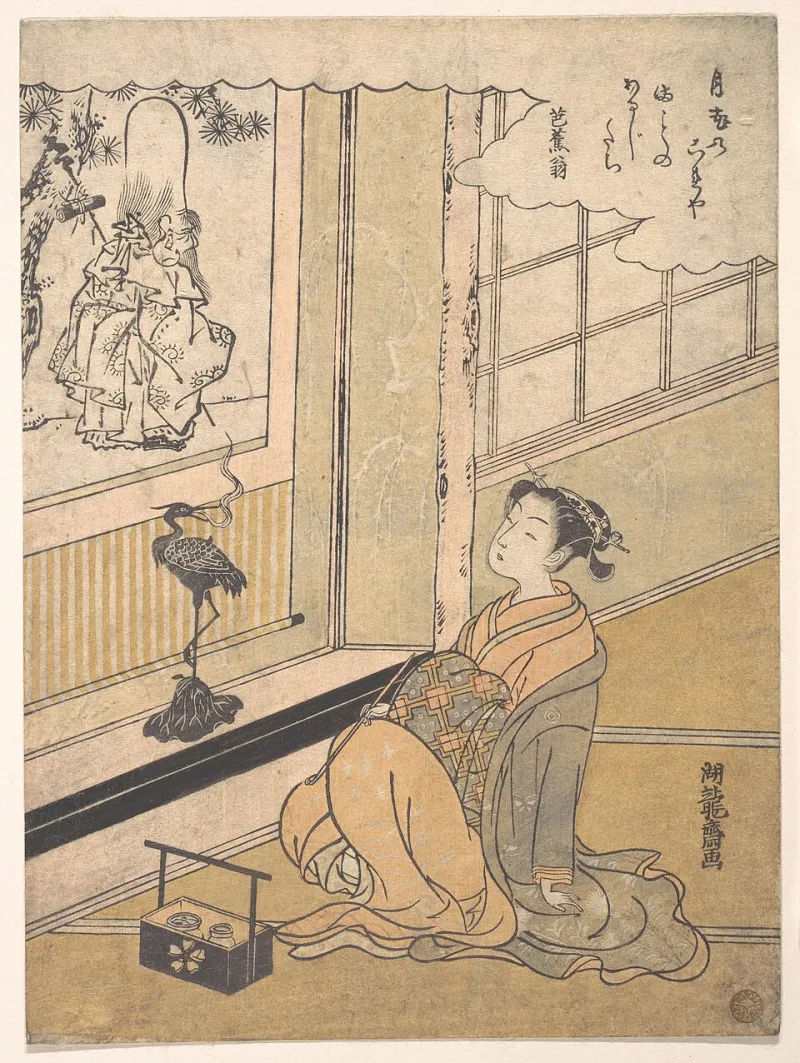
Photo: Isoda Koryūsai, CC0, via Wikimedia Commons
Somewhere between posting a birthday photo and doom-scrolling through Instagram at midnight, something quietly shifted in American culture. Editing your face before sharing it online stopped being unusual. It became, for a significant chunk of Gen Z and millennials, just... normal. Expected, even.
According to a 2023 survey by the Dove Self-Esteem Project, over 80% of girls in the US have used a beauty filter or editing app by age 13. Among adults 18–34, that number climbs higher. Facetune, BeautyPlus, Snow, and a dozen other apps have collectively been downloaded billions of times. The technology has become so seamlessly integrated into how we share ourselves online that many users don't even register it as "editing" anymore — it's just... getting ready.
But what does that mean for us, psychologically? And is there a version of digital beauty enhancement that's genuinely harmless fun versus one that quietly erodes how we feel about our real, unfiltered faces?
The Normalization Nobody Noticed Happening
For most of human history, only a small group of people — actors, models, public figures — had their images professionally retouched before public consumption. The rest of us saw ourselves and each other more or less as we actually looked. That changed slowly with the rise of consumer photo editing software, then rapidly with the smartphone selfie, and then almost overnight with the integration of real-time beauty filters into apps like Snapchat and Instagram.
"What we saw was a compression of the timeline between 'professional image manipulation' and 'something your 14-year-old does before posting a selfie,'" explains Dr. Renee Engeln, a psychology professor at Northwestern University and author of Beauty Sick. "The technology democratized a process that used to require expertise, and it happened so fast that we didn't really have time to process the cultural implications."
The result is a generation that has grown up with a version of themselves — the filtered version — that is always readily available, always more symmetrical, always clearer-skinned, always a little more luminous. And that creates a psychological reference point that the mirror simply cannot compete with.
Why We Do It: It's More Complicated Than Vanity
It would be easy and a little satisfying to chalk beauty app usage up to simple vanity. But the motivations people describe when asked are far more layered than that.
Jamila, a 26-year-old content creator based in Atlanta who asked that her last name not be used, has been using editing apps since she was 19. "Honestly, it started because I felt like everyone else's photos looked better than mine," she says. "It wasn't even about looking 'perfect.' It was about not feeling like the worst-looking person in my friend group's posts."
That framing — editing as a defensive measure rather than a vanity exercise — comes up repeatedly. For many users, filtering isn't about achieving an ideal; it's about avoiding perceived inadequacy in a visual landscape that has been comprehensively enhanced by everyone else.
Dr. Pamela Rutledge, director of the Media Psychology Research Center in California, describes this as a form of "social calibration." "When the baseline of what photos look like on social media shifts — when everyone's skin looks smoother, everyone's teeth look whiter — individuals who don't edit start to feel like outliers," she says. "The app isn't creating insecurity from scratch. It's filling a gap that the platform environment created."
The Snapchat Dysmorphia Conversation
In 2018, a paper published in JAMA Facial Plastic Surgery introduced a term that has since become part of the cultural vocabulary: "Snapchat dysmorphia." The authors described a growing trend of patients coming to plastic surgeons requesting procedures that would make them look like their filtered selfies — not like celebrities or models, but like a digitally smoothed, algorithmically perfected version of themselves.
The phenomenon has since been documented more broadly. A 2022 study in the journal Body Image found that women who spent more time using appearance-altering filters reported higher levels of body dissatisfaction and lower self-esteem, even when controlling for pre-existing insecurities. The act of editing, the research suggested, reinforces the idea that the unedited face is somehow insufficient.
"There's a feedback loop," says Dr. Engeln. "You edit because you feel insecure. The editing temporarily relieves that insecurity. But it also confirms the underlying belief that your real face isn't good enough. So the next time you go to post a photo, the bar has shifted."
Not everyone agrees that the relationship is so linear. Some researchers argue that beauty apps can function as a form of creative self-expression, not unlike makeup or fashion, and that framing all filter use as psychologically harmful is both reductive and moralistic.
The Other Side: When Editing Is Just Play
"I think we need to be careful not to pathologize every person who uses a filter," says Dr. Rutledge. "For a lot of people, especially younger users, this is play. It's costume. It's exploring identity in a low-stakes environment."
Marcos, a 22-year-old student in Los Angeles, uses beauty apps primarily for humor. "I use them to make ridiculous versions of myself, not to look better," he says. "My friends and I send each other the most cursed, over-smoothed selfies as a bit. It's not that serious."
This distinction — between editing as performance and editing as aspiration — matters. The psychological research tends to show that the harmful effects are most pronounced when users are editing with the goal of improving their actual perceived appearance, and when the edited image is then compared back against their real reflection.
The technology itself, in other words, isn't the villain. How it's being used, and why, is where the nuance lives.
What This Means for the Apps Themselves
From a technology standpoint, the beauty app industry has responded to growing mental health criticism with varying degrees of sincerity. Instagram introduced a policy in 2019 restricting certain "cosmetic surgery" filters, citing mental health concerns. Several apps have added "natural" or "subtle" modes designed to offer lighter-touch enhancement. TikTok has experimented with labels on heavily filtered content.
Whether these measures meaningfully move the needle is genuinely unclear. Critics argue they're largely performative — a PR adjustment rather than a structural change to how these platforms profit from insecurity-driven engagement.
Finding Your Own Baseline
For most of us, the answer probably isn't to delete every beauty app and go filter-free as a moral stance. It's more about awareness — understanding why you reach for the app, what you're hoping to change, and whether the habit is serving you or subtly working against you.
If editing a photo before posting it feels like genuine fun, like putting on a great outfit, that's probably fine. If it feels more like a compulsion — if you can't post without it, if you look at your unfiltered reflection with new disappointment — that's worth sitting with.
The apps aren't going anywhere. The filters will keep getting smarter, more convincing, and more seamlessly integrated into how we share our lives. The question isn't really about the technology. It's about what we're looking for when we open it.