Why the Person in Your Edited Photos Feels Like a Stranger in the Mirror
The Face You've Never Actually Seen
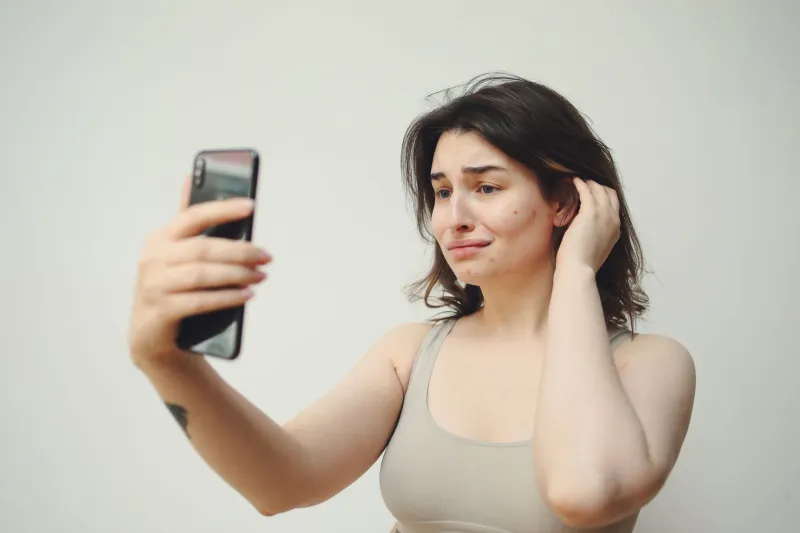
Here's a weird thing that happens to a lot of people: you spend twenty minutes in an app getting a photo just right, post it, feel good about it — and then catch a glimpse of yourself in a bathroom mirror and feel vaguely unsettled. Not bad, exactly. Just... off. Like the mirror is slightly broken.
Spoiler: the mirror isn't the problem.
What you're experiencing has a name in psychology circles — it's a close cousin of the uncanny valley effect, that creepy feeling you get when something almost looks human but not quite. Except in this case, the unsettling thing isn't a robot or a CGI character. It's your own face, bouncing back at you from real life after your brain has spent months calibrating to an algorithmically enhanced version of it.
This is one of the more underreported side effects of how modern photo editing apps actually work. And it's worth pulling apart.
How Apps Build a "Baseline" That Isn't You
Most popular beauty apps — think Facetune, YouCam Makeup, even the built-in filters on Snapchat and Instagram — don't just apply a flat filter. They use AI models trained on enormous datasets of human faces to make targeted decisions: where to soften texture, how to widen eyes, which shadows to lift, how to slim a jawline by a few pixels.
The key word there is trained. These models were built on data that skews heavily toward certain facial ideals. Symmetry. Smoothness. Specific proportions. Lighter, more even skin tones. When the app "enhances" your photo, it isn't just cleaning up noise or correcting for bad lighting — it's nudging your face toward that learned ideal, often without you explicitly asking it to.
That nudge is usually subtle enough that it doesn't register as fake. It just registers as better. And that's exactly the problem.
Over time, your brain starts treating the enhanced version as the reference point. The app has effectively installed a new baseline for what your face looks like — one that exists only in pixels, built from someone else's idea of beauty, and applied to your features without your full understanding of what's being changed.
The Mirror Has No Algorithm
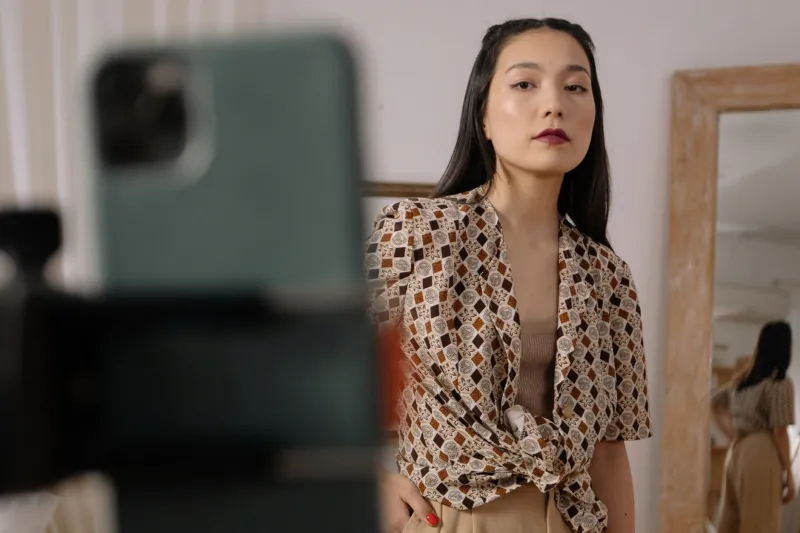
Real mirrors, of course, don't run machine learning models. They reflect light. Flat, indifferent, unoptimized light. Your bathroom mirror doesn't know to lift the shadows under your eyes or soften the texture around your nose. It just shows you your face as it actually is in that particular moment, under those particular conditions.
And increasingly, that experience feels jarring.
This isn't just anecdotal. Mental health researchers and dermatologists in the US have started flagging a pattern they're calling "Snapchat dysmorphia" — a term that's clunky but pretty accurate. People come into consultations describing features they want altered, and when pressed, they're essentially describing the face they see in filtered photos rather than the face they actually have. The filtered version has become more real to them than the real one.
That's a meaningful shift. And editing apps are accelerating it.
Why the Gap Is Getting Wider
A few years ago, beauty filter tech was pretty blunt. Smooth skin here, brighten there. The changes were obvious enough that your brain could easily file them under "this is an edit" and move on. There was a clear psychological separation between the photo and the person.
Newer AI-driven tools are much better at hiding their tracks. The enhancements are granular, contextual, and weirdly personalized — the app adapts to your specific face structure rather than applying a one-size-fits-all overlay. The result looks more natural. Which, paradoxically, makes it more dangerous for your self-perception.
When an edit looks obviously fake, you don't internalize it. When it looks completely plausible — when it looks like a really great photo of you on a really great day — your brain files it differently. It becomes evidence of what you could look like, or what you do look like under the right conditions. The algorithm has successfully reframed itself as lighting and luck rather than manipulation.
Add to that the sheer volume of edited photos most people see of themselves. If the majority of photos you have of your own face are app-processed, your brain's sample set is skewed. The mirror starts to look like the outlier.
The Consistency Problem Nobody Talks About
There's another layer to this that doesn't get enough attention: consistency. When you look at yourself in a mirror, your face moves, changes with light, shifts with angle and expression. It's dynamic. Your edited photos, on the other hand, represent a static, optimized slice — the best frame, the best light, then further refined by software.
Your brain is trying to reconcile two very different kinds of information about the same face. One is messy, variable, and human. The other is clean, consistent, and algorithmic. And the algorithmic version keeps winning the comparison because it's designed to.
This is where the uncanny valley flips direction. Usually, the uncanny valley describes something artificial that almost passes for real. Here, it's the real thing that starts to feel like the imposter.
So What Do You Actually Do With This?
Nobody's saying delete every editing app off your phone. That's not a realistic ask, and frankly, these tools can be genuinely useful — correcting harsh lighting, adjusting exposure, making a photo actually look like what you saw with your eyes rather than what the camera sensor captured.
But there's a meaningful difference between corrective editing and identity editing. One fixes the photo. The other quietly rewrites the face.
A few things that might help recalibrate: take more candid photos and actually look at them instead of immediately deleting them. Spend time with unedited shots. If you're using a beauty app, try toggling between the before and after more deliberately — not to shame yourself, but to stay conscious of the gap the software is creating.
And maybe most importantly: notice how you feel when you look in the mirror. If your own reflection has started to feel like a disappointment, that's useful information. Not about your face. About how thoroughly the algorithm has gotten inside your head.
The mirror isn't failing you. It's just the only screen in your life that doesn't have an agenda.